12 min read
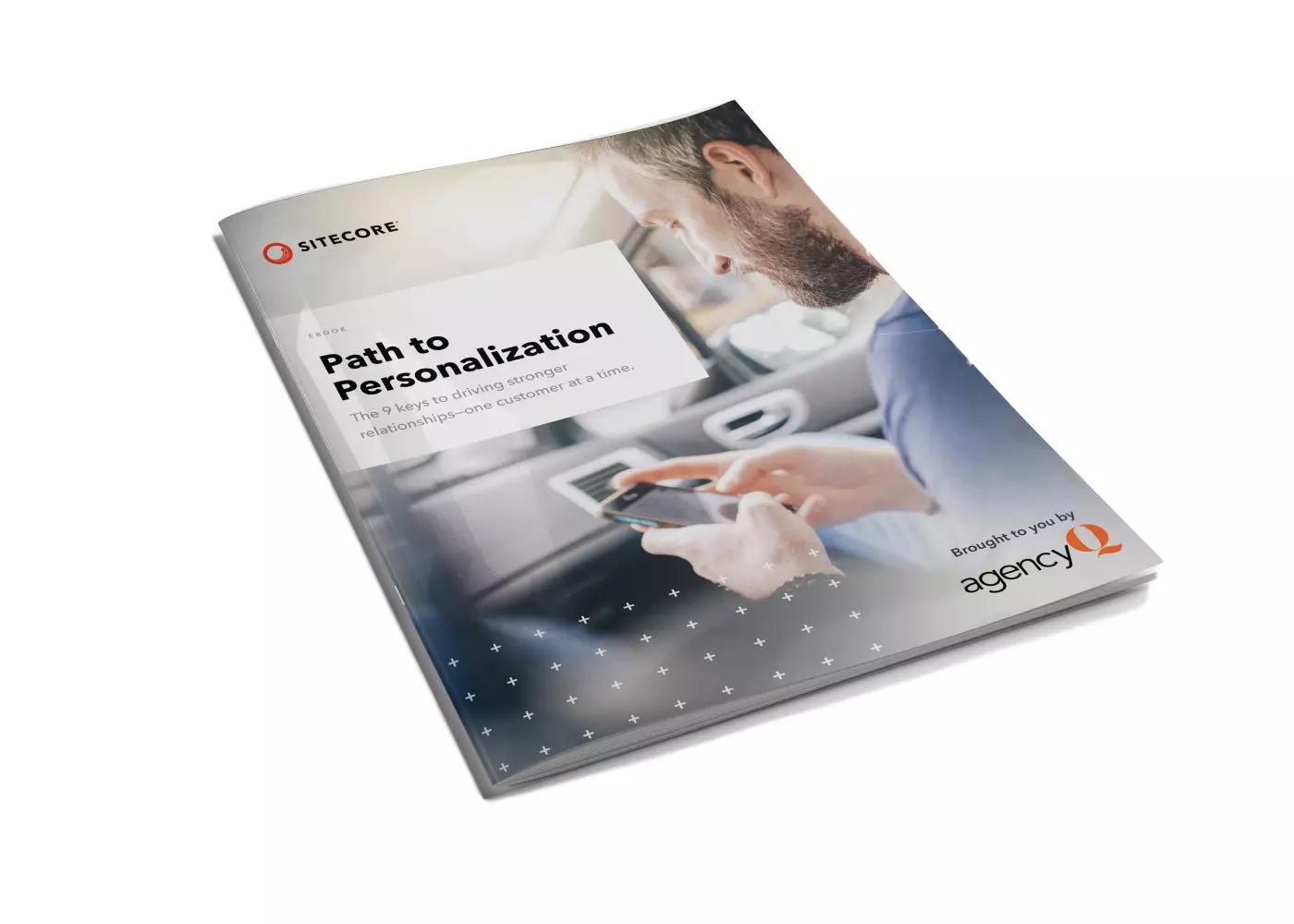
Path to Personalization
Introduction
Any marketer worth their weight in leads knows the benefits of personalization—and yet, a surprisingly large number of companies have not fully embraced this strategic tactic.
Typically, senior marketing professionals see personalization as a double-edged sword. On one hand, there’s no doubting that consumers and end users value personalized experiences and tailored recommendations across channels.
On the other hand, it’s assumed that the prospect of building out those unique digital journeys by creating the content required and managing the data to fuel the entire process seems far too complex.
The good news? Industry-leading brands are showing that the opposite is true.
The Path to Personalization for Enterprises at a Glance
Since the turn of the 21st century, the flame of brand loyalty has wavered in the winds of the internet. According to a Forbes Insight study, only one in four business leaders believes customers are loyal to brands, while 62% say the concept of loyalty is now close to obsolete. The study, which surveyed companies with at least $1 billion in annual revenue, also revealed that developing a customer-focused environment and delivering personalized marketing has become a strategic imperative.
The reason is simple: customers now value the experience more than they value the brand providing it. If your competitor offers a faster, more convenient, and more personalized customer experience, you can’t rely on the aging concept of brand loyalty to rescue you. We as marketers all have to adjust to the new reality that brand loyalty is dead.
Context is queen
If content is king, then context is certainly queen. Delivering tailored experiences at the right time is the key difference between simple personalization and enterprise personalization at scale—and consumers can tell the difference.
Marketers often personalize emails and web content, but very few deliver a continuous experience across channels by displaying personalized content at the right time in the customer’s journey, powered by the contextual information associated with the end-user. For instance, by suggesting sneaker cleaning products after a sneaker purchase, or by altering messaging and product suggestions based on the consumer’s device, the weather they’re experiencing, or local events.
And no, contextualizing personalized content isn’t another luxury. In fact, an Accenture-led study shows that 81% of consumers want brands to understand them better, and they want brands to know when, and when not, to approach them.
Journeys, not moments
With contextualized content in place, you can finally begin constructing the customer journey.
Forward-thinking enterprises don’t see personalization as a series of disconnected moments for the end-user, but as a continuous lifetime journey. For instance, using the customer’s name every so often is useful, but the most it will do is give the customer a few moments of pseudo-personalization.
By combining context marketing with an omnichannel presence, a brand can construct a customer journey map consisting of multiple stages. Typically, industry best practice dictates that you segment the customer journey into the following four key stages:
Need
Every customer starts their journey with a need. For example, they want to purchase a new car.
Research
The customer looks broadly at different brands, models, price ranges, and online reviews along the way. Over a period of days, weeks, or even months, they slowly narrow down their options.
Decision
They make a selection from a short list of possible brands, factoring in past experiences, reviews, and other online information.
Customer
They end their buyer journey by purchasing a car. Then a new chapter in the journey begins, with the onus on the car company to provide a personalized onboarding and customer service experience.
A strong personalization campaign will have personalized content custom-made for each stage of the customer journey, with further tailoring of that content happening in line with the individual customer’s persona and past behavior.
Going omnichannel
Today’s customers are expecting to be able to engage with you on whatever channel they want, whenever they want. If that wasn’t difficult enough, they expect you to remember who they are and personalize their buying experience accordingly. And if you don’t do it, you can bet your competitors already are or are currently working on it.
This is where omnichannel personalization comes in. Omnichannel personalization is the art of developing a consistent and continuous personalized experience that encompasses all digital channels and touchpoints. This includes website content, mobile content, social media, email, smart speakers, wearable technology, digital signage, and other Internet of Things (IoT) devices. The goal is not just to enable the end-user to access your brand through various touchpoints, but to empower them to switch between any touchpoint at any stage in their journey without a hiccup—and without a break in personalization.
This strategy has the ability to collect information across the channels, amalgamate this information under a single unique ID that is associated with the user, and then it utilizes this information to deploy the most relevant and contextual experience to the end-user, no matter where the interaction is taking place.
When you consider that 64% of consumers are willing to pay for seamless customer experiences, the value of omnichannel personalization becomes clear.
The Nine Steps on the Path to Personalization
Next Steps
The harsh reality that brands must face is that if you are not able to do basics in personalization right now, then you won’t be ready for the more advanced personalization techniques later down the line.
We’re already seeing more people using voice search and shopping bots, and these people are expecting a personalized experience through these channels. And as more companies are trying to remove any latency from their personalization process, they’re investing in machine learning and consolidating into platforms like Sitecore. Otherwise, your brand will continue to fall further behind the competition the longer you delay implementing a personalization strategy.
Marketers can no longer afford to view personalization as a pipe dream. The behavior of consumers across industries indicates that end users don’t just expect personalization—they demand it.
Department of Energy—Citizen Experience at the Next Level
Explained
AgencyQ harnessed all aspects of personalization to deliver for DOE. AgencyQ architected a custom technology solution using Sitecore, Coveo, IBM Watson, and Find-it-First (AgencyQ’s proprietary technology tool). First, we automated the analysis and tagging of high volumes of historical content and set up a process for new content to be uploaded, automatically evaluated, and tagged on an ongoing basis. With better tagging and organization, users receive better search results.
The solution allows DOE to track habits of users that come to the site, determine their persona type, and serve them relevant content in their search results. Furthermore, when users perform a search, the presentation of that content dynamically adjusts based on their persona type. This makes the content AND its presentation best suited for the individual’s needs. For example, a third-grade teacher might see results materialize as a classroom ready visual with suggested homework assignments, while an astrophysicist might see charts ready to add to a research report. The site is widely used to help scientists in all roles find their next breakthrough.
Take it with you.
Enter your email to download the white paper.